Carolyn Wilman has got a neat racket going on: play as many contests as possible. Wilman, who lost her job five years ago after the dot-com bust, now devotes her working hours to finding and entering various contests.
Last year she won more than 150 contests, bring in about $34,000 in cash and prizes. In 2004, she won 125 of them worth much the same. She plays everything from 99-cent music downloads to $10,000 Greek Island getaways.
"I actually think I'm on the cusp of where I want to be," Wilman says. "I'm with my family a lot. I've parlayed a passion into a career. For me this hobby is more than a hobby — it's now my life."
Entire article.

Sunday, March 19, 2006

Whiny kids grow up to be conservatives
This was too good to pass up:
How to spot a baby conservative
Whiny children, claims a new study, tend to grow up rigid and traditional. Future liberals, on the other hand ...
By Kurt Kleiner
How to spot a baby conservative
Whiny children, claims a new study, tend to grow up rigid and traditional. Future liberals, on the other hand ...
By Kurt Kleiner
Remember the whiny, insecure kid in nursery school, the one who always thought everyone was out to get him, and was always running to the teacher with complaints? Chances are he grew up to be a conservative.Entire article.
At least, he did if he was one of 95 kids from the Berkeley area that social scientists have been tracking for the last 20 years. The confident, resilient, self-reliant kids mostly grew up to be liberals.
The future of science
 Stewart Brand of the Long Now Foundation has organized a series of seminars which he hopes will build a "coherent, compelling body of ideas about long-term thinking, to help nudge civilization toward Long Now's goal of making long-term thinking automatic and common instead of difficult and rare."
One such seminar has recently been published on Edge.org by Kevin Kelly. Titled, "Speculations on the Future of Science," Kelly tries to predict how science and the scientific method will change over the next 50 years.
As a starting point, he looks at how recursion is at the heart of science; Kelly compiled a list of new recursive devices in the history science:
2000 BC — First text indexes
200 BC — Cataloged library (at Alexandria)
1000 AD — Collaborative encyclopedia
1590 — Controlled experiment (Roger Bacon)
1600 — Laboratory
1609 — Telescopes and microscopes
1650 — Society of experts
1665 — Repeatability (Robert Boyle)
1665 — Scholarly journals
1675 — Peer review
1687 — Hypothesis/prediction (Isaac Newton)
1920 — Falsifiability (Karl Popper)
1926 — Randomized design (Ronald Fisher)
1937 — Controlled placebo
1946 — Computer simulation
1950 — Double blind experiment
1962 — Study of scientific method (Thomas Kuhn)
Looking to the future, Kelly makes some predictions (details can be found in the article):
1) There will be more change in the next 50 years of science than in the last 400 years
2) This will be a century of biology
3) Computers will keep leading to new ways of science
4) New ways of knowing will emerge
5) Science will create new levels of meaning
More specifically, Kelly comes up with possible breakthroughs in how science is done:
Compiled Negative Results - Negative results are saved, shared, compiled and analyzed, instead of being dumped.
Triple Blind Experiments - In a double blind experiment neither researcher nor subject are aware of the controls, but both are aware of the experiment. In a triple blind experiment all participants are blind to the controls and to the very fact of the experiment itself.
Combinatorial Sweep Exploration - Much of the unknown can be explored by systematically creating random varieties of it at a large scale.
Evolutionary Search - If new libraries of variations can be derived from the best of a previous generation of good results, it is possible to evolve solutions.
Multiple Hypothesis Matrix - nstead of proposing a series of single hypothesis, in which each hypothesis is falsified and discarded until one theory finally passes and is verified, a matrix of many hypothesis scenarios are proposed and managed simultaneously.
Pattern Augmentation - Pattern-seeking software which recognizes a pattern in noisy results.
Adaptive Real Time Experiments - Results evaluated, and large-scale experiments modified in real time.
AI Proofs - Artificial intelligence will derive and check the logic of an experiment.
Wiki-Science - The average number of authors per paper continues to rise.
Defined Benefit Funding - The use of prize money for particular scientific achievements will play greater roles.
Zillionics - Ubiquitous always-on sensors in bodies and environment will transform medical, environmental, and space sciences.
Deep Simulations – As our knowledge of complex systems advances, we can construct more complex simulations of them.
Hyper-analysis Mapping – Just as meta-analysis gathered diverse experiments on one subject and integrated their (sometimes contradictory) results into a large meta-view, hyper-analysis creates an extremely large-scale view by pulling together meta-analysis.
Return of the Subjective - Existence seems to be a paradox of self-causality, and any science exploring the origins of existence will eventually have to embrace the subjective, without become irrational.
Tags: science, scientific method, predictions, kevin kelly, foresight, long now foundation, futurism.
The Posthuman Condition: Consciousness beyond the Brain, by Robert Pepperell (2003)

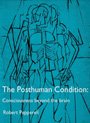 This highly readable update to a 1998 release unites the postmodern and the posthuman in a provocative but limited piece of speculation
By George Dvorsky, November 3, 2003
The philosophical struggle to grab hold of and understand what is real and what is not is as old as civilization itself. Today, in light of the potential for radical human redesign and the reimagining of the human organism and condition, perspectives as to what constitutes the self, the body and the environment are becoming increasingly vague and inadequate.
Author Robert Pepperell, in this revised version to his 1998 book The Post-Human Condition, explores these particular themes while challenging the traditional assumptions of human uniqueness and superiority in consideration of 21st century technologies. As Pepperell notes, "the possibilities suggested by synthetic intelligence, organic computers and genetic modification are deeply challenging to that sense of human predominance."
Moreover, through the application of a discernibly postmodernist bias to futurist issues, The Posthuman Condition reads like a critique of rigid scientific methodologies and traditional humanism. Questions of machine consciousness and sentience are difficult to answer, writes Pepperell, "given the redundant concepts of human existence that we have inherited from the humanist era, since many widely accepted humanist ideas about consciousness can no longer be sustained." New theories about nature and the operation of the Universe, he argues, are "starting to demonstrate the profound interconnections of all things in nature where previously we had seen separations."
Considering that most futurists and transhumanists adhere to the legacy of rational humanism and Enlightenment notions of perpetual progress, Pepperell takes his life into his own hands by co-opting the posthuman and claiming it as his own. He even includes his own posthuman manifesto.
Consequently, The Posthuman Condition, while it reads lucidly and vibrantly, is a book that infuriates as much as it titillates. Pepperell offers an interesting but problematic fusion of skeptical epistemology with the latest thinking in the sciences, including cybernetics, artificial intelligence and chaos and complexity theories. Ultimately, while he offers provocative insight into the nature of knowledge and consciousness, he offers very little in terms of practical futurology, while completely misunderstanding and ignoring the valid humanistic roots of today's practical posthumanism.
The real and the artificial
The founder of the Hex multimedia collective and the coauthor of The Postdigital Membrane, Pepperell recognized the inexorable collision of postmodernist thinking with futurism back in 1998 when he wrote the initial version of The Posthuman Condition.
For Pepperell, posthumanism is more than just the attainment of a post-biological state of being, it also marks the end of the humanist period of social development, because of "the fact that our traditional view of what constitutes a human being is now undergoing a profound transformation."
The profound transformation that he speaks of is the fusion of humans and machines and the rise of artificial intelligence. Pepperell exposes the lines that are about to blur and wonders how thinkers will distinguish between the real and the artificial, the original and the simulated, the organic and the mechanical. He suggests that very soon these will become little more than semantic distinctions.
To bring his readers up to speed on the technologies that will bring these changes, Pepperell devotes the introduction of his book to a concise summary of the pending technologies, including quick notes on robotics, communications, prosthetics, intelligent machines, nanotechnology, genetic manipulation and artificial life. Once he gets this formality out of the way, Pepperell gets down to the nitty-gritty, and tackles one of the hardest problems in modern science, that of consciousness. And true to his scientific skepticism, he takes a philosophical approach to the problem of mind.
The fuzzy human
In spite of his avoidance of any substantive discussion of the mechanics behind human consciousness, Pepperell offers a fascinating account of how consciousness should be understood, defined and circumscribed. In Stelarc-like fashion, he declares that there are no boundaries that divorce humans from their environment. Pepperell advocates a form of "embedded" or "embodied" intelligence, arguing that consciousness cannot be understood—let alone exist—without placing it in the sensorial and perceptual context of the conscious being's environment.
"[A]n integrated continuum exists throughout human consciousness, body and environment," writes Pepperell, "such that any distinction in that continuum...is contingent and arbitrary." The general implication, he argues, is that we can never determine the absolute boundary of the human, either physically or mentally. "In this sense, nothing can be external to a human because the extent of a human can't be fixed," he writes. The implication is anything but trivial, suggesting that "human beings do not exist in the sense in which we ordinarily think of them, that is as separate entities in perpetual antagonism with a nature that is external to them."
Indeed, there is undoubtedly much truth to embodied intelligence theory. It is impossible to deny that the mind cannot exist without a body and an environment, whether real or simulated. The mind feeds and reacts off the information that is fed to it by its body and surroundings.
So powerful is this conception that, as Pepperell concedes, it is quite possibly the most dominant paradigm in artificial intelligence research today. The human, the mind and the environment are indistinguishable, says Pepperell, leading him to conclude that posthuman intellects will continue to migrate and blend into their surroundings.
Attacking scientific reductionism
Continuing with this line of inquiry, Pepperell declares that there are no determinate origins, ends, complete answers or final reasons for the existence of anything. "It's not that we can't find them," he writes. "But that they're just not there."
Along the lines of fuzzy knowledge, Pepperell notes that recent scientific ideas have upset conceptions of order and disorder, continuity and discontinuity—namely chaos, catastrophe and complexity theories. It is because of these insights, argues Pepperell, that humanist notions of mechanism, reductionism and determinism have become dated.
However, Pepperell's disapproval of scientific reductionism should be taken with a grain of salt, and not just because he replaces it with its bipolar cousins, expansionism and extensionism. These types of deconstructionist and postmodernist lines of inquiries often venture far too close to radical skepticism for my liking. Accusing scientists of reductio ad absurdum can come perilously close to denying the measured, calculated and predictable observations of the Universe. As evolutionary biologists Richard Dawkins once said, "reductionism is explanation."
On humanism and posthumanism
Pepperell's take on the humanist legacy isn't entirely fair or accurate. He declares posthumanism to be the philosophical and methodological successor to humanism, but fails to acknowledge how humanist thinking has in many ways contributed to progressive posthumanist thought; in many respects, posthumanism is the transitional successor to humanism, and not postmodernism as Pepperell insinuates. In fact, while most of those who call themselves posthumanist tend to be critical of the humanist movement, more and more humanists have, with relative ease, shifted their thinking in favor of progressive or transhuman thinking.
In one example, Pepperell characterizes humanism as a philosophy that places humans in a combative relationship with nature. Posthumanism, says Pepperell, suggests that people are not in opposition to nature, but an intrinsic part of it. While this is interesting from a philosophical perspective, particularly as it pertains to human consciousness, it does very little to explain how we are to deal with such things as disease, asteroid impacts and gamma ray bursts.
For centuries now, humanists have insisted that it is through the comprehension of our surroundings that we can better deal with the dangers of nature. Thinkers such as Marquis de Condorcet, David Hume, Denis Diderot, Claude Adrien Helvétius and Benjamin Franklin insisted that nature was not necessarily something to be fought or resisted, but something to be understood in order for humanity to better survive and prosper.
In some respects, this is an issue of semantics. Pepperell considers the post-biological or transhumanist element to be one facet of his brand of posthumanism, the other parts being the end of humanism and the beginning of a new (or is that old?) form of epistemological skepticism. It is because of Pepperell's proprietary definition of posthumanism that a number of futurists and transhumanists will have serious problems with his analysis.
Future persons
To bolster his argument, Pepperell includes a very interesting chapter on art, aesthetics and creativity. His analysis of Einsteinian relativity and cubism reveals that perceptual relativity can cross mediums, and is a developmental trend that has now entered into our cultural artifacts.
Pepperell, an artist himself, aptly observes that art forms exist outside of speculative fiction that contributes to our sense of our present and future selves. That being said, his subsequent chapter on automating the creative process felt somewhat out of place and forced. If Pepperell was trying to argue that creativity is a requisite for consciousness, he did so in an unconvincing and incomplete way.
Still, as do many futurist and transhumanist thinkers, Pepperell predicts a time when synthetic and cybernetic creatures will walk the earth. Where he and other futurist thinkers diverge, however, is in how these intellects and posthumans will conduct their affairs.
Aside from saying that it will act creatively and artistically, Pepperell is surprisingly vague on future life, except for such statements as, "Science will never achieve its aim of comprehending the ultimate nature of reality. It is a futile quest...[t]he posthuman abandons the search for the ultimate nature of the Universe and its origin (thus saving a lot of money in the process)."
Pepperell is less concerned with pragmatics than he is in formulating the philosophical rudiments of what he believes will be the next era in the social development of intelligent life. Essentially, Pepperell takes a science studies approach to futures issues while also taking the opportunity to slam scientific reductionism, including conventional notions of what is meant by consciousness and humanity, all the while touting postmodernist notions that proclaim the limitations to what can realistically be known.
What makes this work so interesting and perplexing is that Pepperell uses the latest science to reveal the limitations of science. It would seem that the more we know, the less we know—or, as Pepperell would claim, the more we know, the more we realize what we can't know.
Copyright © 2003 George Dvorsky
This column originally appeared on Betterhumans, November 3, 2003.
Tags: transhumanism, posthumanism, posthuman, epistomology, technology, reviews, book reviews.
 post to del.icio.us
Better Living through Transhumanism
More than just a philosophy and social movement, transhumanism is for many a way of lifeBy George Dvorsky, November 10, 2003
Some experts believe that all genetic-based diseases will be eliminated by 2030. The widespread application of genetic and other technologies, it is thought, may also result in significant increases to human intelligence, memory, physical health and strength. Some expect the achievement of indefinite lifespans this century and believe that immortals already walk among us.
Researchers suspect that the development of strong nanotechnology in the coming decades will result in molecular assemblers that effectively function like Star Trek replicators. A number of experts are hopeful that medical nanotechnology will be used to revive those who are preserved in cryonic stasis. It is also suspected that advances in both nanotechnology and robotics will greatly alter the current socioeconomic infrastructure, potentially resulting in such things as massive unemployment, the need for a basic guaranteed income, and the general rethinking of how people should coordinate their activities and leisure time.
Steady advances in computing processing power are leading many experts to conclude that human-equivalent artificial intelligence may be attainable by the year 2040, if not sooner. After that, as intelligent machines continue to redesign themselves and recursively improve, they will likely develop into superintelligences, with cognitive capacities thousands of times greater than that of humans. No one knows what this will mean to humanity, causing futurists to dub the hypothesized event the "technological singularity," or simply the Singularity.
These predictions are nontrivial to say the least. Of course, they are just predictions, and most casual observers maintain that these things will never come—or at least not within their lifetime. Futurists such as myself tend to be less skeptical, recognizing the remarkable upward trends in technological research and development; things are set to change quite dramatically and quite quickly.
In consideration of these predictions, a growing number of people are turning to transhumanism, which aims to promote and encourage human enhancement through the application of science and technology. They maintain that this is a good thing, and that we should encourage and work towards the attainment of a posthuman condition.
While many—including me—have written often about transhumanism, few have elaborated on how the transhumanist mindset has an impact on how people live their life in the present. Not ones to dwell on the future while passively waiting for it to happen, transhumanists engage in foresight, activist and promotional activities.
Just as significantly, the day-to-day lifestyle choices of transhumanists such as me reflect anticipated change. I am in my early 30s, which means that barring some unfortunate accident (with no cryonic or other backup plan) I'll be around to witness, participate and take advantage of future radical developments. Consequently, everything from my ethical and moral foundations to my eating and exercising habits are in some way influenced by how I think the next 50 years will go.
And I am hardly alone. Transhumanism is in many respects a burgeoning lifestyle choice and cultural phenomenon.
Transhuman spirituality and ethics
Without unforeseen conceptual or political impediments to scientific and technological progress, or some kind of manmade or natural catastrophe, some if not all of the predictions I listed above are likely to come to fruition this century, possibly even during the next 50 years.
For society in general, this will represent a mixed blessing at best. People who cling to dated, comforting and static worldviews, including those who suffer from scientific illiteracy, are heading for serious bouts of future shock. Cyborgs, transgenic human-animal hybrids, sentient machines and uploaded consciousnesses can do that.
To be fair, some of the more radical notions and predictions even make me squirm in my seat. To help me deal with future shock, and to objectively assess the changes that humanity is about to undergo, I often rely on some good ol' fashioned Buddhism to help me through.
I was a Buddhist before I became a transhumanist, but the two idea-sets proved to be surprisingly compatible. In fact, many transhumanists describe their "spiritual" or moral beliefs as having Eastern and Buddhist influences. Personally, Buddhism works for me on a number of levels, including its humanism, compassionate tenets, and its denial of God and the soul, or the self.
I am also partial to how Buddhists encourage progress and the cultural harmonization of the observations of Western science. Like the humanists of the Enlightenment, Buddhists tend to see science and progress as a way to better comprehend reality and as a means to reduce suffering. Buddhists see no hubris with scientific research. The Universe and all that is in it is not something to be fought and resisted, nor should its components be divided into the sacred and profane, the natural and the unnatural. Einstein, who may have been a Buddhist himself, once asserted that Buddhism is the future of religion, and acknowledged that, "The most incomprehensible thing about the Universe is that it is comprehensible."
The Dalai Lama himself has openly stated that Buddhist goals are "the same as those of Western science," to "serve humanity and to make better human beings." The Dalai Lama has also gone on record as saying that he believes an artificial consciousness is attainable and should be treated and respected as a person. Buddhism, unlike many other religions or philosophies, reject "yuck factor" ethics, abstractions and romantic divinations in favor of rational, pragmatic and empathetic considerations. It's no coincidence, therefore, that so many Buddhists subscribe to personhood ethics.
Transhumanists can certainly relate. Most have put their trust in science, and have no trouble imagining themselves as nonbiological or transgenic posthuman organisms. Moreover, transhumanists tend to recognize the medical potential for future technologies and how it can and should be applied to reduce diseases and disabilities and to create "better humans."
And more radically, transhumanists such as me look to science and technology as a possible means for the creation of a Nirvana-esque and quasi-utopian future—or at the very least, as a means for perpetual progress.
Live long and prosper
I became a vegetarian last year and, once again, as a transhumanist I am by no means unique in this respect. I was a very unlikely candidate for this type of change, as I used to eat meat at nearly every meal. But a number of factors conspired to lead me to this change.
Obviously, the Buddhist respect for sentient life played a significant part. Combined with recent advances in the cognitive sciences, it became obvious to me that many of the nonhuman animals that landed with great regularity on my dinner plate were once intelligent and conscious creatures. Moreover, I realized that it was unnecessary for my survival or health that animals should continue to die for my benefit.
I also became a vegetarian for health and longevity reasons. Even conservative predictions suggest that the goal of negligible senescence will be achieved at the turn of the next century, meaning that I would have to live to 130 years of age—not outrageous if you consider the advancements that are sure to come in genetics, biogerontology, cybernetics and nanotechnology. Thus, being in my 30s, I realized that if I were to reap the benefits of future life extension technologies, including the radical possibility of attaining an indefinite lifespan, I was putting those possibilities at risk by clogging my arteries with animal fat and filling my brain with Creutzfeldt-Jakob disease, and not reaping the benefits of antioxidants and raw foods.
And true to transhumanist and Extropian principles, the conversion to vegetarianism (or any other life change) can be interpreted as an expression of ongoing personal evolution and the continual challenge to improve one's moral, intellectual and physical condition. Complacency is not a word in the transhumanist vocabulary.
When it comes to life-extending eating habits, however, there are some transhumanists who make me look like a kid after Halloween. Many immortalists practice caloric restriction, for example, which experiments have shown retards the aging process in every animal tested so far. Some immortalists carefully manage their diet, including vitamins and supplements, and even test their blood to help guide their dietary and pharmaceutical choices. Many transhumanists believe that such short-term pains will be surely outweighed by long-term gains.
Applying unconventional technologies and techniques
The idea of fooling the body's natural processes, through such things as caloric restriction, is referred to in some circles as "biohacking." Transhumanists recognize that their bodies are a kind of machine—one that can be studied, understood and subjected to hacks. A recent article by Katharine Mieszkowski on Salon, "Hackers on Atkins," showed how a number of dieters are "cheating" by going on the low carbohydrate, high protein and unintuitive Atkins diet. As Mieszkowski says, the Atkins diet is a "a sneaky algorithm for getting the body to do what you want it to do, a way of reprogramming yourself. Programmers, who are used to making their computers serve their will, are now finding that low-carb diets enable the same kind of control over their bodies."
Similarly, although not considered technology by most, I consider yoga and meditation to be types of "software enhancements" that, when applied, strengthen both the body and mind. Yoga, aside from being extremely enjoyable, offers numerous physiological and psychological benefits, including increases to strength, endurance, balance and somatic and kinesthetic awareness. Yoga, of which I practice Hatha, also improves mood, reduces feelings of hostility, depression and anxiety, and increases feelings of self-acceptance and self-actualization.
Meditation is another powerful technique, one that not only calms the body and mind, but also improves mood and clarity of thought. It also contributes to greater cognitive awareness and happiness. Meditation helps me to better regulate my thoughts and emotions and to better understand how it is that certain ideas, feelings and motives enter into my conscious thoughts and how I can better process and act on that information. I often think of my meditation, which is derived from the Theravadan Vipassana tradition, as memetic Vipassana meditation, as it helps me better manage the competing memes that often cloud and influence my thoughts and perception.
Applying hi-tech to daily living
Needless to say, transhumanists also apply the latest technologies to their daily lives to both overcome biological limitations and to enhance individual performance and efficiency. I tend to take a Zen transhumanist approach to computer use, and I am never satisfied with my work processes. I am constantly striving to improve and refine my work habits to come up with quicker and more effective ways of working.
For example, I memorize patterns of keyboard shortcuts to increase my efficiency when working on mundane or repetitive tasks. I don't go anywhere without my handheld PDA, which acts as my memory and math skills prosthesis, an on-demand dictionary and thesaurus, and as a task scheduler. I use group collaboration tools to help me with my work and I visit personal networking sites to help me meet and communicate with people with similar interests. I know of some transhumanists who carry around small recording devices to supplement their memories, constantly recording conversations and other audible events.
As a contributor to the transhumanist blogosphere, I have to find lots of information fast, and because of my busy schedule, time is often of the essence. To help me find news items, I use the Mozilla Web browser's multiple tabs and group bookmarks functionality; when scouring the Web for information, I refer to about six different sets of preconfigured and specialized bookmark groups that contain as many as 15 Websites each. I also use the Google News Alerts feature so that the news comes to me.
Speaking of Mozilla, like many transhumanists, I am also interested in the open source movement, as it not only represents a new and innovative way of developing new technologies from a bottom-up and user-perspective, but it may come to represent an important change in the development, economy and dissemination of new technologies.
At the same time, I consciously avoid certain technologies, namely television and video games. While I recognize the entertainment and (sometimes) educational value of these mediums, they are the soma of our times, representing drug-like distractions from my goals, contributing to passivity rather and activity.
Better at assessing change and progress
Transhumanists tend to look at the world through linear-colored glasses. News items are almost exclusively evaluated based upon their short and long-term impact on the human condition. As a result, most transhumanists consider the daily headlines put out by the major media outlets to be trivial and disinteresting at best.
For example, a new item about the latest efforts to expand the lifespan of a nematode worm to the equivalent of 500 human years will reach the back pages of most news publications, but it's the kind of news that tops the lists in transhuman circles. The same goes for debates about research on stem cells, human cloning, genetics, bodily autonomy issues, the state of health care and artificial intelligence. This is the stuff, transhumanists maintain, that really matters.
Consequently, transhumanists, through their worldviews and lifestyle choices, and through their ability to deal with and better understand the changes on the horizon, are putting themselves in a better position than most to anticipate and apply the coming technologies to their lives and their bodies; they are inoculating themselves against future shock.
Transhumanists hope that future advancements will work to the benefit of humanity, and that missing out on this potential, either because of sweeping bans or preventable catastrophes, would be a travesty. Thus, a significant part of the transhumanist agenda involves getting the word out.
The more people are brought into these discussions the better. It is vital that the high degree of knee-jerk and reactionary opinion that dominates discussions of posthumanity be reduced as much in possible in favor of rational, informed and realistic discussions. By having these issues and debates enter into the popular zeitgeist, we collectively stand a better chance of avoiding the stresses and confusions sure to be posed by coming waves of radical change.
Copyright © 2003 George Dvorsky
This column originally appeared on Betterhumans, November 10, 2003.
Tags: transhumanism, spirituality, human enhancement, life extension, technology.
post to del.icio.us
Subscribe to:
Posts (Atom)