Monday, April 3, 2006

John Bruce describes transhumanism as a cult

I received an email from J Hughes today informing me about how blogger John Bruce has blasted Glenn Harlan Reynolds for promoting transhumanism. Here's the letter:
The blogger John Bruce recently read Glenn Harlan Reynolds' Army of Davids, which promotes transhumanism, and has decided to launch a campaign to have newspapers drop Reynolds on the grounds that he promotes the "transhumanist cult." I exchanged some email with Mr. Bruce trying to bring him up-to-speed, but it had no effect. It seems clear that he is motivated by some personal and partisan agenda I don't full understand. He writes for The Dartmouth Review and The New Partisan, and appears to want Reynolds to blog and link back to launch an "Instalanche" of traffic to Bruce's blog.

This is his letter to the WSJ trying to alert them to Reynolds "cultism."

http://mthollywood.blogspot.com/2006/04/e-mail-to-wall-street-journal-i-sent.html
Monday, April 03, 2006
E-Mail To The Wall Street Journal

I sent the following e-mail to the Letters editor of OpinionJournal, with a copy to the features editor:

I've become concerned that you intend regularly to publish pieces by Glenn Reynolds in your Opinion Journal Federation. I've begun to notice that in his blog posts, as well as in his freelance pieces and in his book, Reynolds is making thinly disguised pitches for a cult-like belief system called "transhumanism". In fact, Reynolds identifies himself as a "transhumanist", but he doesn't make it plain that this involves bizarre beliefs. I don't think the Wall Street Journal should be providing a respectable platform for such opinions without investigation. There are several blogs that have been looking into "transhumanism" and trying to sound alarms, including that of Andrew Keen at http://andrewkeen.typepad.com/the_great_seduction/2006/03/technology_and_.html (Keen wrote one of the very rare unfavorable reviews of Reynolds's book at The Weekly Standard) and mine at
http://mthollywood.blogspot.com

In particular, Reynolds and Raymond Kurzweil share many aspects of this bizarre belief system. Reynolds gave a highly favorable review of Kurzweil's book The Singularity is Near in the WSJ on October 1, 2005. However, I don't believe Reynolds acknowledged the extent to which he
and Kurzweil share the bizarre, cult-like "transhumanist" belief system, and as a result, I believe Reynolds may have had a conflict of interest.

With many other transhumanists, Reynolds and Kurzweil believe in a "Singularity", which is an apocalyptic event predicted within the next 30-40 years in which computers become super-efficient and the human race merges with machines. This will allow the human-machine combine to do things like cure diseases and death via "nanotechnology". In this view, human beings, once they merge with computers, will become immortal robot-like beings (within 30-40 years). A web search should show you that transhumanists typically misuse the term "nanotechnology" to refer to the ability of hypothetical future atomic-size robots to repair disease and reverse any problem that may cause death. This is not the scientific use of the term.

That some may believe in a merged, immortal computer-human life form and nanobots is only part of the problem. Some cultists go so far as to have their brains or whole bodies frozen when they die in anticipation that after the Singularity, the nanobots will be able to fix whatever led to their deaths and bring them back to life. I don't believe Reynolds has expressed a public opinion on this, but Kurzweil is on record as saying he will have his brain frozen when he dies, and by his public example he advocates the practice. Mainstream medical practitioners make it clear there is no scientific support for this practice, and some refer to it as quackery.

However, some believers have gone far enough to request assisted suicide in the belief that if they kill themselves now and have their brains or bodies frozen, they can be brought back after the Singularity and cured without the need to suffer from degenerative diseases. There is at least one case on record of an individual "suicided" with an overdose of barbiturates before having her brain frozen. I'm concerned that the WSJ may, by publishing its favorable review of Kurzweil and by providing Reynolds with a respectable platform, be helping to further these views.

In his review of Kurzweil's The Singularity is Near, Reynolds said

"Naturally, Mr. Kurzweil has little time for techno-skeptics like the Nobel Prize-winning chemist Richard Smalley, who in September 2001 published a notorious piece in Scientific American debunking the claims of nanotechnologists, in particular the possibility of nano-robots (nanobots) capable of assembling molecules and substances to order. Mr. Kurzweil's arguments countering Dr. Smalley and his allies are a pleasure to read -- Mr. Kurzweil clearly thinks that nanobots are possible -- but in truth he is fighting a battle that is already won."

I've read the Smalley piece Reynolds refers to, and this is simply an attempt by a mainstream scientist to debunk the transhumanist cult-like view that atom-size robots can cure all disease, as well as aging and death. The tendency to dismiss mainstream scientific views is, of course, characteristic of cults and quackery. Kurzweil, who is an inventor and self-promoter with no background in chemistry, is portrayed as out-arguing a Nobelist.

If the Wall Street Journal's editors knew that one Scientologist was going to review (very favorably) another Scientologist's book, and the book was a highly slanted apology for Scientology, I don't believe the WSJ would print such a thing. But this is what Reynolds did with Kurzweil. I'm concerned that Reynolds often includes not fully ingenuous pitches for transhumanism, in his blog, in his book, and in his other freelance writing.

I urge the WSJ's editors to review this problem and make a decision as to whether Reynolds should continue to have a respectable platform to advocate cult-like thinking.
So, there you have it. After reading this, I decided to write a letter to John Bruce:
Mr Bruce,

It is extremely regrettable that you have chosen to characterize transhumanism as a cult and to compare it to a known cult like Scientology. With these comments you have not only perpetuated a falsehood about transhumanism, you have trivialized an actual cult that actively goes about its business of ruining lives.

Transhumanism is at most a philosophy of science and broad-based social movement with no fixed political or religious agenda. Futurists, scientists, and philosophers who make conjectures about a possible transhuman future most certainly do not go about creating mindless drones, nor are they engaging in any kind of pseudoscientific or quasi-religious endeavor. As an idea it has been around for centuries, spawned by the Enlightment and a cousin of secular humanism. It has only recently crystallized as an academic discipline and as a social movement that is both concerned and hopeful of various pending technologies.

Some of the world's most distinguished scientists are currently thinking very hard about humanity's future, many of whom agree that a potential Singularity or some kind of 'existential paradigm shift' awaits us in the not too distant future. The idea of a transhuman future is hardly the monopoly of Ray Kurzweil. A short list of highly respected scientists who agree that a posthuman future awaits us include Steven Hawking, Sir Martin Rees, Michio Kaku, Nick Bostrom, Hans Moravec, Marvin Minsky, and James Watson. And there are many, many others; I urge you take a look at the citations in Kurzweil's Singularity book to see how broadly these ideas have disseminated throughout academia and research labs around the world.

You may not agree with any of these thinkers' conclusions, but disagreement hardly justifies the claim that transhumanism is a cult.

Moreover, there are a number of thinkers who have been in opposition to transhumanism who agree that these are plausible projections, particularly the potential for radical life extension. Francis Fukuyama and Leon Kass immediately come to mind. At no time have these individuals described transhumanism as a cult or as pseudoscientific, and I challenge you to prove me otherwise.

Consequently, I am formally asking you to retract your irresponsible and false mischaracterization of transhumanism as a cult.

Regards,
George Dvorsky
Institute for Ethics and Emerging Technologies
Board Director
[btw, if you'd like to give Mr Bruce your 2 cents: j.bruce@gte.net]

Tags: , , .

Thinking faster by altering your perception of time

People who undergo extreme short-term psychological stress often claim that time slowed down for them during the experience. Traumatic events like car accidents or lengthy falls often appear in slow motion to the person experiencing it.

Is this just a recall error? Or are people literally experiencing these events at an altered subjective time rate? If so, how could such a psychological phenomenon be accounted for? Obviously, time is not really slowing down -- but something is happening to the psychological interpretation of time.

One possible answer is to compare the human brain's "clockspeed" to that of a computer's. Some scientists now suspect that slowed time elapsement is an evolved defence mechanism similar to our fight-or-flight response. When time appears to have slowed down, we have more subjective time in which to deal with a crisis situation. Put another way, extreme stress helps us to think faster.

One scientist looking into this phenomenon is David Eagleman from the University of Texas at Houston. At his 'Laboratory for Perception and Action' Eagleman is attempting to understand the neural mechanisms of time perception. His team combines psychophysical, behavioural, and computational approaches to address the relationship between the timing of perception and the timing of neural signals.

At the experimental level, Eagleman is engaged in exploring temporal encoding, time warping, manipulations of the perception of causality, and time perception in high-adrenaline situations. Ultimately, he hopes to use this data to explore how neural signals processed by different brain regions come together for a temporally unified picture of the world.

In one of his experiments, Eagleman had volunteers perform a backwards bungee jump freefall while he transmitted a rapid succession of numbers to an LED on their wrists. He found that during the fall they were successfully able to read the numbers, which under normal conditions would have appeared too fast. [I have to say, that is one of the most interesting and original experiments I've heard of in quite time some]

Thinking about Eagleman's research at a practical level, it is thought that a better understanding of these mechanisms will result in interventions that will help people process information at higher rates. This kind of 'think faster' augmentation would slow time down in a subjective sense, which would enable an individual to operate at a higher level of cognitive efficiency.

This theme has been explored in a number of science fiction stories. In Frank Herbert's Chapterhouse: Dune, the ghola Miles Teg was able to engage in extremely fast physical combat due to his ability to rapidly process information. Teg was able to subjectively experience time in extreme slow motion. Similarly, Neo in The Matrix was able to dodge bullets by altering his perception of time elapsement. And in Greg Egan's Diaspora, uploaded posthumans had to drastically slow down their internal clockspeeds when conversing with biological humans; clockspeeds in the real world varied dramatically from the clockspeed utilized in supercomputer 'polises.' Also in Diaspora, a group of posthumans altered their perception of time to such a slow rate that they could perceive the rising and fallings of geological structures such as mountains.

Here in the real world, such neural enhancements are rare, but not entirely impossible. It is thought, for example, that hockey ultrastar Wayne Gretzky was able to perceive the flow of the game at a slower pace than his competitors, giving him more subjective time to plan his attack. This may in fact be the case. At the height of his career, Gretzky was not just a 'little better' than other players, he was dominating to a degree never before seen in sport, breaking records by extreme margins. And this from a player who was physically unremarkable--in fact, below average.

Just what kinds of interventions could enable humans to 'warp time' is a topic of some speculation. A recent Discover article titled "The Mind in Overdrive" offers some possible solutions. Psychotropic substances are one possible answer, as drugs like cocaine and amphetamines have been known to alter subjective time for users. Also, meditating Buddhist monks claim to be able to perceive time differently; through their mental discipline, they may be recreating the same effect that Eagleman is documenting.

I'm certainly hoping that something like this will eventually become accessible. It will be interesting to see how much more productive and "aware" one might be with the benefit of these sorts of interventions. It may even create an alternative sense of subjective reality.

And it would surely come in handy the next time you need to dodge bullets.

Tags: , , , , , .

Saturday, April 1, 2006

Latest SentDev Podcast posted [01-Apr-06]


The latest Sentient Developments podcast is now available.

Feed: http://feeds.feedburner.com/PodcastSentDev

Tags: , , , , , , , , , , , , , , , , , , , , , , , .

DARPA to develop Einstein-Rosen bridge

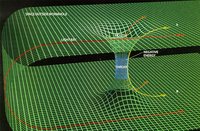
DARPA, the US military’s advanced concepts research team, is working on an ambitious project to create nothing less than an ‘Einstein-Rosen bridge'. Referred to by some physicists as ‘timeholes,’ it is thought that the US military is set to introduce time travel to the battlefield by the end of the decade.

“This is clearly the future of armed conflict,” says DARPA lead scientist Tetsuo Hasegawa, “the ability to go back in time and destroy the enemy before tensions have even arisen would represent an unprecedented advantage in the history of warfare.”

Hasegawa has been working on the ERB project since 1998, but with little progress to show for. Recently, however, he came across the idea of creating a Lorentzian traversable wormhole – a special kind of wormhole that would allow a human to travel from one side of the wormhole to the other.

Indeed, only recently has the idea of creating a working Einstein-Rosen bridge become feasible. Long the stuff of science fiction and heady theoretical physics, the ability to create a tunnel that interlinks the fabric of spacetime is now within our grasp.

“The answer was starring us right in the face,” says Hasegawa. “If a Lorentzian spacetime contains a compact region Ω, and if the topology of Ω is of the form Ω ~ R x Σ, where Σ is a three-manifold of nontrivial topology, whose boundary has topology of the form dΣ ~ S², and if furthermore the hypersurfaces Σ are all spacelike, then the region Ω contains a quasipermanent intra-universe wormhole.”

It was at that point in their research that the DARPA team knew they were on to something. As Hasegawa noted, “There were high-fives around the lab that day, let me tell you.”

In physics, a wormhole is a hypothetical topological feature of spacetime that is essentially a "shortcut" through space and time. A wormhole has at least two mouths which are connected to a single throat. By making the wormhole traversable, the US military hopes to send manned vehicles from one mouth to the other by passing through the throat.

In addition to going back in time before the enemy is ready, it is also hoped that “quick-trip” time jumps will be made to the recent past in the event of a mistake or miscalculation on the battlefield. In this sense, the ERB would essentially act as a real-world 'undo' button. It is even speculated that so-called “foresight trips” will be made to the future to assess potential outcomes.

When asked about such ethical and practical problems as disrupting sensitive timelines or the grandfather paradox, Hasegawa noted, “Sure, those are potential issues, but I think you’re missing the point – this is time travel we’re talking about.”

DARPA hopes to roll-out a prototype ERB for testing in late 2008.

Tags: , .

Computer Virus Spreads to Human

A software developer from Houston, Texas has become the first human to contract a computer virus, microbiologists have confirmed.

John Newman, an employee of vTouch Systems, came into contact with the virus through the use of a neural interface that his company is developing.

Avril DuChamps, a spokesperson for vTouch Systems, confirmed yesterday at a press conference that Newman had come down with the virus. All activities at vTouch have been suspended until further notice.

W32.0401.Worm

The virus, which has subsequently been identified as a variant of the W32.0401.Worm computer virus, appears to copy itself by exploiting a protocol vulnerability in the electroencephalogram neural link that vTouch Systems is developing to connect a human brain with external devices.

The virus is also unique in that it has the flexibility to toggle its reproductive code based on the medium in which it resides. Originally programmed in C++, it can shift to RNA-based replication once in an organic substrate.

While relatively harmless in the digital realm, W32.0401.Worm has caused some health problems for Newman, who is suffering from a mild fever and severe diarrhea.

Expected to happen

"We knew that something like this was eventually going to happen," says Charles Kane, a researcher with antivirus company SterileData. "We just didn't think it was going to happen so soon."

Kane, who tracks new computer viruses for SterileData, found himself in the unlikely situation of having to consult with microbiologists at the US Centres for Disease Control.

"They were just as shocked we were," he says. "But they quickly came to the same conclusions that we did, and they were of great assistance to us in quickly isolating and identifying the new pathogen."

It is unlikely that the virus can be transmitted from human to human, but researchers are not taking chances.

Newman is currently being held in quarantine at St. Luke's Episcopal Hospital in Houston. Doctors monitoring his condition expect a full recovery.