Saturday, April 1, 2006

Latest SentDev Podcast posted [01-Apr-06]


The latest Sentient Developments podcast is now available.

Feed: http://feeds.feedburner.com/PodcastSentDev

Tags: , , , , , , , , , , , , , , , , , , , , , , , .

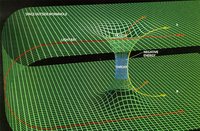
DARPA to develop Einstein-Rosen bridge

DARPA, the US military’s advanced concepts research team, is working on an ambitious project to create nothing less than an ‘Einstein-Rosen bridge'. Referred to by some physicists as ‘timeholes,’ it is thought that the US military is set to introduce time travel to the battlefield by the end of the decade.

“This is clearly the future of armed conflict,” says DARPA lead scientist Tetsuo Hasegawa, “the ability to go back in time and destroy the enemy before tensions have even arisen would represent an unprecedented advantage in the history of warfare.”

Hasegawa has been working on the ERB project since 1998, but with little progress to show for. Recently, however, he came across the idea of creating a Lorentzian traversable wormhole – a special kind of wormhole that would allow a human to travel from one side of the wormhole to the other.

Indeed, only recently has the idea of creating a working Einstein-Rosen bridge become feasible. Long the stuff of science fiction and heady theoretical physics, the ability to create a tunnel that interlinks the fabric of spacetime is now within our grasp.

“The answer was starring us right in the face,” says Hasegawa. “If a Lorentzian spacetime contains a compact region Ω, and if the topology of Ω is of the form Ω ~ R x Σ, where Σ is a three-manifold of nontrivial topology, whose boundary has topology of the form dΣ ~ S², and if furthermore the hypersurfaces Σ are all spacelike, then the region Ω contains a quasipermanent intra-universe wormhole.”

It was at that point in their research that the DARPA team knew they were on to something. As Hasegawa noted, “There were high-fives around the lab that day, let me tell you.”

In physics, a wormhole is a hypothetical topological feature of spacetime that is essentially a "shortcut" through space and time. A wormhole has at least two mouths which are connected to a single throat. By making the wormhole traversable, the US military hopes to send manned vehicles from one mouth to the other by passing through the throat.

In addition to going back in time before the enemy is ready, it is also hoped that “quick-trip” time jumps will be made to the recent past in the event of a mistake or miscalculation on the battlefield. In this sense, the ERB would essentially act as a real-world 'undo' button. It is even speculated that so-called “foresight trips” will be made to the future to assess potential outcomes.

When asked about such ethical and practical problems as disrupting sensitive timelines or the grandfather paradox, Hasegawa noted, “Sure, those are potential issues, but I think you’re missing the point – this is time travel we’re talking about.”

DARPA hopes to roll-out a prototype ERB for testing in late 2008.

Tags: , .

Computer Virus Spreads to Human

A software developer from Houston, Texas has become the first human to contract a computer virus, microbiologists have confirmed.

John Newman, an employee of vTouch Systems, came into contact with the virus through the use of a neural interface that his company is developing.

Avril DuChamps, a spokesperson for vTouch Systems, confirmed yesterday at a press conference that Newman had come down with the virus. All activities at vTouch have been suspended until further notice.

W32.0401.Worm

The virus, which has subsequently been identified as a variant of the W32.0401.Worm computer virus, appears to copy itself by exploiting a protocol vulnerability in the electroencephalogram neural link that vTouch Systems is developing to connect a human brain with external devices.

The virus is also unique in that it has the flexibility to toggle its reproductive code based on the medium in which it resides. Originally programmed in C++, it can shift to RNA-based replication once in an organic substrate.

While relatively harmless in the digital realm, W32.0401.Worm has caused some health problems for Newman, who is suffering from a mild fever and severe diarrhea.

Expected to happen

"We knew that something like this was eventually going to happen," says Charles Kane, a researcher with antivirus company SterileData. "We just didn't think it was going to happen so soon."

Kane, who tracks new computer viruses for SterileData, found himself in the unlikely situation of having to consult with microbiologists at the US Centres for Disease Control.

"They were just as shocked we were," he says. "But they quickly came to the same conclusions that we did, and they were of great assistance to us in quickly isolating and identifying the new pathogen."

It is unlikely that the virus can be transmitted from human to human, but researchers are not taking chances.

Newman is currently being held in quarantine at St. Luke's Episcopal Hospital in Houston. Doctors monitoring his condition expect a full recovery.

Friday, March 31, 2006

The end of livestock

The science of tissue engineering and the development of in vitro meat may one day, hopefully, result in the end of livestock.

And with it, the end of unnecessary cruelty to non-human animals, a decrease in the frequency of animal-to-human borne diseases (which is like, all of them), the alleviation of environmental degradation caused by animal farming, and an end to unhealthy, unclean, hormone-ridden and antibiotic laden meat.

Humans eat 240 billion kilograms of meat every year. Imagine how many animals that represents. Now imagine each of those lifetimes as they are individually experienced: caged, crammed, frightened, diseased, poked, prodded, neurotic, psychotic, and all followed by slaughter. Don’t think so? Read this, this, this, this, and this. And then watch this.

Then there’s all the cropland, water, fertilizer, pesticides and energy required to produce animals for the killing floor. And what about the millions of tonnes of manure and other waste produced every year in North America?

As Jared Diamond noted in Guns, Germs, and Steel, humans have been consistently traumatized by the continual spread of diseases, which in virtually every case has been spawned by human-to-animal contact (predominantly the result of maintaining livestock). Current health and pandemic risks such as mad cow and avian flu are all heightened as a consequence of animal farming.

Moreover, with the introduction of in vitro foods, in vitro meat products would be far healthier than the real thing. Cultivated meats would be engineered to be healthier and cleaner.

In vitro meat is still meat in every sense of the term. According to Wikipedia, the process is as follows:
Meat essentially consists of animal muscle. There are loosely two approaches for production of in vitro meat; loose muscle cells and structured muscle, the latter one being vastly more challenging than the former. Muscles consist of muscle fibers, long cells with multiple nuclei. They don't proliferate by themselves, but arise when precursor cells fuse. Precursor cells can be embryonic stem cells or satellite cells, specialized stem cells in muscle tissue. Theoretically, they can relatively simple be cultured in a bioreactor and then later made to fuse. For the growth of real muscle however, the cells should grow "on the spot", which requires a perfusion system akin to a blood supply to deliver nutrients and oxygen close to the growing cells, as well as remove the waste products. In addition other cell types need to be grown like adipocytes, and chemical messengers should provide clues to the growing tissue about the structure. Lastly, muscle tissue needs to be trained to properly develop.
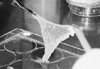
In vitro meat, referred to by some as laboratory-grown meat, is animal flesh that has never been part of a complete, living animal.

According to a recent Globe and Mail article, scientists can grow frog and mouse meat in the lab, and are now working on pork, beef and chicken. Their goal is to develop an industrial version of the process in five years. It will be at that point that we can say a viable threat exists to the ongoing presence of animal farming. And at the very least it will certainly make the presence of livestock that much less justifiable.

That being said, it will be a struggle to convince people to eat synthetic meat over the real thing. Most people who have ethical issues with eating meat are already vegetarians--so devout meat eaters aren’t really listening. And it’s doubtful that die-hards will give up their tried-and-true meat over an artificial and likely inferior-tasting product.

Perhaps it’ll take the death of millions and millions of people from avian flu for people to start questioning meat eating culture.

One last thought: if there are any arguments from anybody that in vitro meat is still somehow unethical or demeaning to an animal, they seriously need to rethink things. A chunk of tissue grown in a petri dish is as far removed from an existential, emotional, and conscious creature as is a rock.

That being said, I can already hear the howls of outrage...

Tags: , , , , , , .

Thursday, March 30, 2006

Toronto Transhumanist Association events for April

The Toronto Transhumanist Association is pleased to announce a pair of upcoming events.

First, on Thursday April 6 at 7:00 PM, Allan Randall will introduce us to the fascinating world of cryonics and cryonicists. Mr Randall is the current Secretary and Director for the Cryonics Society of Canada.

Mr Randall is also a teacher and graduate student in philosophy, mathematics and quantum mechanics at York University. He has a BSc in mathematics and an Msc in Computing. Mr Randall has worked on AI research at NTT Systems for the Canadian Department of National Defence.

Allan Randall's talk will be held at the Bahen Centre for Information Technology, 40 St. George Street, Room 1200 (see BA on the map at http://www.osm.utoronto.ca/map).

Second, on Thursday April 20 at 7:00 PM, Mark Walker Ph.D. will be presenting a talk on the ethics and merits of radical life extension. The talk will be based on his recent paper, “Universal Superlongevity: Is It Inevitable And Is It Good?

Dr Walker is a research associate in philosophy at Trinity College, University of Toronto. He is founder and president of Permanent End International, a nonprofit organization devoted to ending hunger, illiteracy and environmental degradation. He serves on the editorial board of the Journal of Evolution and Technology and served on the Board of Directors of the World Transhumanist Association from 2002 to 2006. He is currently serving on the Board of Directors for the Institute for Ethics and Emerging Technologies.

Mark Walker's talk will also be held at the Bahen Centre for Information Technology, 40 St. George Street, Room 1200 (see BA on the map at http://www.osm.utoronto.ca/map).

I hope to see you all there!

Cheers,
George Dvorsky
President, Toronto Transhumanist Association

Tags: , , , , .