Sir Martin Rees, Royal Society professor of astronomy at Cambridge University, agrees that it is now possible to conceive of computers so powerful that future societies may use them to build an entire virtual universe. In fact, like Nick Bostrom (who penned the first academic treatise on the subject), Rees wonders if we ourselves aren't the inhabitants of such a simulation.
These types of futuristic proclamations are nothing new for Rees, who has also argued that humans will eventually spawn machine intelligences and develop molecular assembling nanotechnology. It looks to me like he's keeping himself up to speed on all the transhumanist literature.
Now, on a related note, I'd like to take issue with a claim made by Jonathan Leek, the author of the Times Online article about Rees (which is really quite weak). In the article, "Top scientist asks: is life all just a dream?", Leek writes that René Descartes "famously came down in favour of existence, saying: 'I think, therefore I am.'" He uses this as possible evidence in favour of the argument that we are not in a simulation.
This is not an accurate interpretation of Descartes's assertion, nor does it disprove the Simulation Argument. In fact, Descartes's dictum opened the door to the possibility that existence as it is perceived may be a complete fabrication of some sort. Cartesian skepticism suggests that the only thing we can know for certain is that we can be aware of our own conscious, subjective self.
Further, a simulated reality would still constitute a bona fide 'existence' that could be experienced by a self-referential agent. I believe Leek is suggesting the contrary. A simulated existence is still an existence so long as it is perceived by a conscious observer and a high degree of modal realism is maintained.

Wednesday, November 1, 2006

Tuesday, October 31, 2006
Simon Funk's "After Life"
 Sci-Fi author Simon Funk has released an excellent short story that he has made available for free over the Internet. The story is called "After Life" and deals with the issue of consciousness uploads.
Excerpt:
I'm writing this now as I'm not sure what I'll remember tomorrow. Hell, I'm not even sure I'm writing this now. Yesterday when I woke up...
Well, let me back up a little. I don't know who will ever read this, so I should explain. I--we, the people I work with, study the brain. Right now we are working on something pretty neat, but also scary. We want to map a brain, functionally, down to the individual neuron. The trouble is, until now there's been no way to do this without killing the brain's owner.
But we've been able to do it--with a rat, and a cat. We don't really know if it worked with the cat, but we are currently running a simulation of the rat's brain and it appears to be exhibiting strikingly rat-like behavior. I.e. fucking amazing. Top secret. Even writing this down on something outside of company premises I'm sure violates a dozen clauses in my contract, but...let me move forward.
This is basically my project. I'm the one who's had the faith in it from the start, the drive to push it forward, and the ingenuity to make it work. But I feel I've been fighting bureaucracies the whole way, from trying to get money from people who could never understand what it's for to trying to get permission from people who could never understand why they should give it. We want to scan a monkey next. I think we'll be employing lawyers and public relations people for years to get that one to fly.
Monday, October 30, 2006
Is IBM's Blue Brain project a precursor to an AI project?
 If you want to understand how something works you should model it the best way you can.
This is precisely what IBM and the Brain and Mind Institute (BMI) are trying to do with the brain. Called Blue Brain, it is a project that was initiated in May 2005 with the lofty goal of modeling the mammalian brain. IBM and BMI claim that the aim is not the creation of AI, but a way to study how neurons in the brain interact with one another. Their intention is not to re-create the actual physical structure of the brain, but to simulate it using arrays of supercomputers.
I'm somewhat dubious of their claim that this is not an effort to develop AI. The construction of a simulated brain is awfully close to the development of AI. While this project may not be an immediate attempt to develop AI, I think it is at the very least a precursor to such a project. As the developers themselves admit, they are trying to model how information is formed in memories and how it is retrieved. Yes, it’s a different approach than trying to code for AI, but if it ends up looking like a duck and quacking like a duck…
As evidence that IBM and BMI are thinking about AI, the initial goal of the project is to simulate a neocortical column, which is the smallest functional unit of the neocortex. This is the part of the brain that is responsible for higher functions such as conscious thought. In humans, the neocortical column is 2mm tall, has a diameter of 0.5mm and contains 60,000 neurons. Project developers are initially working to replicate the neocortical column of a rat, which has only 10,000 neurons. It will take 2 years alone to construct a simulated column. Developers hope to model the human brain in about 10 years.
To model these components the developers will use a Blue Gene supercomputer that will run the MPI-based 'Neocortical Simulator' combined with 'NEURON' software. Blue Gene is a computer architecture project that will spawn several next-generation supercomputers -- computers that will reach operating speeds in the petaflops range, and are currently reaching speeds over 280 sustained teraflops! Its 8,000 processors will crunch away at 23 trillion operations per second.
The developers are hoping to use Blue Gene to create biologically realistic models of neurons. In fact, the results of the simulation will be experimentally tested against biological columns.
Once the neocortical column is developed, project developers will attempt to replicate the simulation at the molecular level (does this imply nanotech?) and work to simplify the column such that they will be able to run parallel simulations of large numbers of connected columns. You could say that running parallel simulations is important; the human brain consists of about 1 million cortical columns.
IBM has always thought big. Their dedication to the Deep Blue experiment and their existentially shocking success at defeating a grandmaster at chess shows that they have serious intentions. While Honda toils away on Asimo, IBM is trying to figure out a way to endow such a robot with brains.
Taking into consideration their dedication to these sorts of projects, and considering the resources and expertise at their disposal, I strongly suspect that IBM will be the first group to develop strong AI and possibly greater-than-human artificial intelligence. Blue Brain is certainly a step in this direction.
References:
Forbes: IBM Aims to Simulate a Brain
Blue Brain Project Homepage
Wikipedia
Simon the cryonaut
It's official: Simon Smith, the editor-in-chief of Betterhumans and my good friend, is now signed up with Alcor. I was present when he opened the envelope and put his bracelet on for the first time. He looked up at me and said with great seriousness, "Now I get frozen." Simon recently posted a blog entry about his decision to go with cryonics.
Sunday, October 29, 2006
Buddha Break 2006.10.29
 I went to a meditation class today that was organized by my yoga instructor. The yogi who conducted the class had over 30 years experience and studied for a while under the Maharishi Mahesh Yogi. My own meditation practice is drawn from the vipassana tradition, so I was unknowingly venturing into uncharted territory.
The yogi began by telling us a bit about himself, including his upbringing as a Roman Catholic (why are so many R.C. expats drawn to Eastern philosophies and religion?) and a short stint with a fringe Christian sect. He noted his disillusionment with the Vietnam War and how he came to discover Eastern philosophies, including Transcendental Meditation (TM). He also noted how one of his mentors could levitate about 6 inches off the ground – a claim that immediately got my back up and made me feel very uncomfortable.
The lesson given by the yogi was a bit more reasonable and grounded in the standard fare: life is a buzz of activity; the mind is conditioned to go, go, go; it’s difficult to quiet the mind; we are not our thoughts.
But there were some lessons I was unaccustomed to. The yogi noted how we need to find our true 'essence' or true 'self' -- which I’m not so sure is a view shared by Buddhists who contend that there is no definable self or true essence. He said we should strive to perceive our lives through the perspective of this true essence, which is like the vantage point of an observer who is a witness to our life. This, I think, is a bit more in tune with Buddhism, which suggests detachment from the ego (“In the world, but not of it”).
As for the meditation, it was quite unconventional – and the yogi admitted as much. He had us do relaxation exercises and meditation while lying down. Normally meditation is done in a sitting position, but I think the yogi was trying to make it easy for the beginners and to impart the lesson that if you quiet the body you quiet the mind. The relaxation exercises were nice, and I was able to relax my sore shoulders (which were tense from being in an alien environment with unfamiliar people).
Once the meditation started we focused on the breath – a practice that I’m very familiar with. But after a few minutes of that he had us move ‘beyond’ a focus on the breath to a focus on the pure mind. This I could not understand nor accomplish. In fact, the idea of zoning-out like this is anathema to my own notions as to why we meditate and how we work to improve the practice of mindfulness. It might be my ignorance, but it seemed “unmindful” to try to attain a state of uber-relaxed ‘pure mind.’ I don’t even know what that means.
Moreover, I think it’s impossible. The whole vipassana practice is based around the idea that the mind can never be truly quiet – it can only be tamed (which is a great analogy for life and the Dharma). And it’s through the practice of mindful meditation that we can acquire the concentration and the mental discipline to remain rooted in the present and go about the business of the Dharma. In a way, I saw this quasi-TM type of meditation as a form of escapism.
 After the meditation I aksed the yogi if this was TM, which he said it wasn't. TM involves the use of a mantra that is repeated by the meditator. Yet despite this, I found it grating every time we were instructed to ‘transcend’ ourselves, our breath, or our thoughts – a word that was repeated far too many times for my liking. Perhaps its my Western upbringing, or my secular values, but I’m more interested in striving toward those things that are human attainable. And this is exactly what secular Buddhist Stephen Batchelor teaches. We run the risk of looking at the Buddha as some kind of demi-God or ‘transhuman’ as Batchelor puts it (not to be confused with the futurist transhuman). If we make this mistake, we undermine our own journey by failing to realize that Siddhartha was a regular schmuck just like you and me.
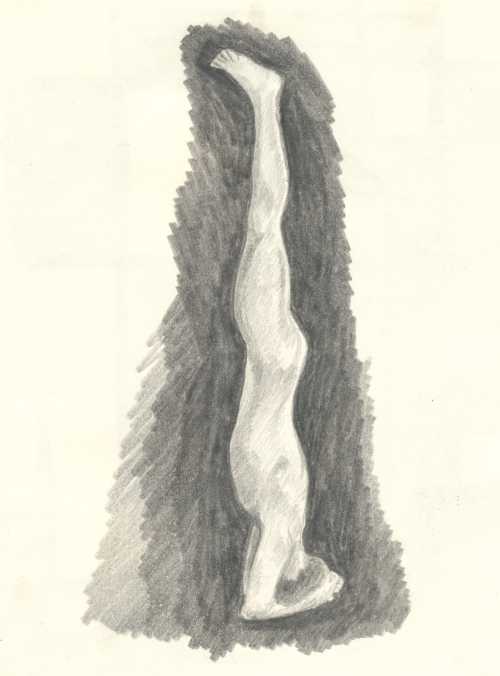
After the meditation I went to yoga class. I am really starting to make some progress. In addition to being able to hold poses for a bit longer and to stretch just a little bit further, I can now do an unassisted headstand. This is a huge deal for me; after the first time I did it I did a little dance around the room for joy.
Ah, there’s nothing like progress to keep you motivated.
Subscribe to:
Posts (Atom)