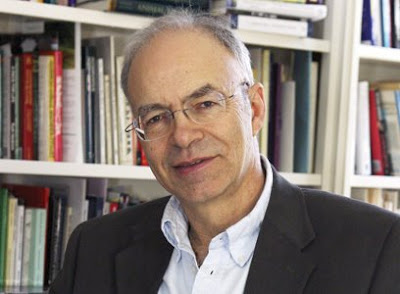
Monday, January 19, 2009

Guest Blogger: Russell Blackford: Freedom of religion (or freedom of belief, conscience, and worship).


Why does it matter?

Well, it matters to me. In my previous post I raised the implications of the atheist bus, but it's not just that.

At the same time, I've been writing some submissions to government reviews here in Australia, including a submission to the National Human Rights Consultation and a submission to a separate project on freedom of religion and belief (the latter conducted under the auspices of the Australian Human Rights Commission). Issues to do with freedom of religion have also come up in the process of editing Voices of Disbelief (working title) the book that I'm working on with Udo Schuklenk , to be published in September by Wiley-Blackwell.

One of the issues that arises again and again is how far freedom of religion is some kind of positive right to get resources from others … and, related to this, how far it's a free pass, enabling you to wriggle out of rules applying to everybody else.

I'm going to argue that it's neither of those. But to do so I need to put forward my own view as the what this important freedom is all about. I used to think it was fairly uncontroversial, but I'm increasingly discovering that it isn't. Perhaps you disagree with my account of it, as many folks who are solicitous towards religion evidently do.

The core idea

The point that I really want to hammer in this post is that freedom of religion - which can be expanded to freedom of belief, conscience, and worship - is no more, but no less, than a negative right against the state. Of course, it's a very important one. For a start, it's a guarantee that the state's power of fire and sword (or in modern terms, prison bars and guns) will not be used in free societies to suppress religious beliefs. This negative right against the state is fully compatible with other such negative rights, including freedom of speech. But contrary to what is sometimes asserted, it is not a positive right against the world for it to help you out.

Imagine that Helena is an adherent of, say, Zeusism. She does not thereby have a right that other citizens must give her Zeusist beliefs their credence, deference, or esteem (as opposed to respecting her political right to hold them without persecution). There can be no guarantee that her doctrines will impress others as wise, plausible, or even rational; they may, indeed, impress others as the opposite – perhaps even as demeaning or ridiculous. Moreover, there is no guarantee that others won't use their freedom of speech to express their own unfavourable impressions of Zeusism, even in pointed ways.

Nor does Helena have a right that resources be provided through the tax-transfer system, to ensure that Zeusism persists and flourishes. That is not the original or natural meaning of freedom of religion, and I see no reason to make it the contemporary meaning. Except in some extraordinary circumstance, it is really no business of the state which religious sects flourish and which die out over time.

The freedom involves two fairly simple things:

(1) The state will not attempt to impose religion, including religious doctrines, ceremonies or other practices of worship, or religious moral teachings, on those who do not accept the religion concerned; and

(2) The state will not attempt to suppress any religion, including its doctrines, practices, etc.

These two limbs correspond roughly to the two "freedom of religion" clauses contained in the First Amendment to the US Constitution, commonly known as the Establishment Clause and the Free Exercise Clause. However, I have added explanatory detail to make clear that what is envisaged is a thoroughgoing separation of religious doctrine from state power: neither is to affect the other. Religion cannot demand that the state impose it on the unwilling (because the state is forbidden from doing any such thing); and the state cannot make laws to suppress religious doctrines that it dislikes.

The combination of the two limbs entails that a citizen need not fear that the state will suppress the doctrines that she subscribes to, or the practices that they require. In any event, it cannot do so by direct and deliberate actions. We'll come back to that next time.

Moreover, the citizen need not fear that doctrines and practices that are foreign to her — those she does not subscribe to — will be imposed on her by the might of the state. In the latter case, it makes no difference whether she rejects the doctrines and practices because: (a) she prefers the inconsistent doctrines and practices of her own religion; or (b) she rejects all religious doctrines and has no convictions of her own that could be described accurately as "religious".

Indeed, if she is to have full reassurance that she is safe from state interference with her convictions about deep matters, she needs to know that limb (2) will be interpreted broadly so that the state will not attempt to suppress her convictions even if they are not those of any identifiable religion. Freedom of belief and conscience supplements freedom of merely religious belief; the ordinary meanings of these words suggest that the state will refrain from suppressing any honest convictions on deep matters (or even not-so-deep ones!), regardless whether or not they are taken from religious teachings (and whether or not they are connected with any religion or any identifiable system of thought that has religion-like characteristics).

This two-limbed doctrine provides an important area of freedom for individuals. At the same time, it provides a great benefit to public policy. If the first limb is applied strictly, then there will be no jockeying (or at least no successful jockeying) by different religious (or similar) groups to gain access to the power of the state.

As John Locke knew, back in the seventeenth century, when he argued powerfully for religious tolerance, it eliminates a source of intractable division and conflict. In order to obtain a peaceful political order, we relegate religion to an area of personal belief that is none of the state's business. In developing public policy, the state is "religion blind" and relies on purely secular principles such as the harm principle and the need to provide an economic safety net.

What the freedom doesn't do

Note, however, that there are also limits to what is provided by the two limbs of freedom of religion. There is no requirement that the adherents of one religion (Zeusism for example) should cease to regard its doctrines as absolute Truth or should cease to regard the doctrines of other religions as pernicious. Zeusists may have a doctrine that Mardukism is a lie and a snare, the creation of an evil demon — and they are perfectly free to think this and express it, so long as they don't resort to violence or otherwise break the general law. While a regime of non-persecution may often soften the attitudes of religious sects, as Locke hoped, there is no requirement that they give up on criticising each other, or seeking converts, or even teaching that rival sects are inspired by wickedness.

In short, freedom of religion - or, better, freedom of belief, conscience, and worship - provides a strong protection against the power of the state to persecute infidels and heretics, suppress doctrines, or impose its own view of orthodoxy and religious morality. At the same time, it leaves all concerned with freedom to think what they like of each other. They retain the right to hold to their own doctrines, along with their general freedom of belief, speech, and expression. But nothing about freedom of religion suggests that religious sects or their adherents are "nice", or that they must become so. The state can't tell the Zeusites to like the Mardukites, or reassure the Mardukites that the Zeusites will henceforth look kindly on them. Or vice versa.

There's more that this freedom doesn't do for the religious, I'm afraid, but I'll return to that in Part 2.


Russell Blackford is an Australian philosopher. He has published extensively (novels, short stories, academic monographs and articles, and book reviews) and is editor-in-chief of The Journal of Evolution and Technology. His home blog is Metamagician and the Hellfire Club.

Sunday, January 18, 2009

Guest Blogger: Russell Blackford: Implications of the atheist bus.


Over at Metamagician and the Hellfire Club, I've been blogging about the atheist bus.

For those who don't know about it, there's an advertising campaign going on in the UK at the moment involving buses with signs that say:

"There's probably no God.
Now stop worrying and enjoy your life."


I love this slogan, and think it makes the point well. I have a lot more to say about that on my home blog. Briefly, it's a nice, gentle riposte to religious messages on buses that ask us to worry about whether we're "saved" or not, and about what's going to happen to us after death.

Of course, a message like this breaks a powerful taboo. One of the issues that has arisen from the atheist bus campaign relates to a bus driver who objected to driving a bus with this advertisement. As it happened, the bus company handled the issue in a pretty low-key way, and that was probably wise (or so I think) in this unexpected, one-off situation.

It seems that they let him go home on the Saturday afternoon when there was no other bus to drive, though it's not clear to me whether or not they docked his pay for the afternoon. According to the article that I've linked, when he returned to work on Monday he was called into a meeting with managers. He agreed to go back to work, and they agreed that he would only have to drive the buses if there were no others available. That's an attempt to accommodate his position without a commitment that he would be excused from driving the "atheist bus" if it was the only one they could assign to him. I don't mind the way this was handled, although I've seen lots of claims that management was too soft. (I'm sure there are also lots of people who think it outrageous that an employee can be directed to drive a vehicle with such a heinous, anti-Christian sign on it. Hallelujah!)

Over here at Sentient Developments, I don't so much want to get into the merits of what management should have done in this situation. But where do you draw the line? Surely we shouldn't give bus drivers a right of conscientious objection to driving buses with advertisements for products that they dislike or perhaps even consider morally abhorrent. Where does it end if you go down that path? Some will object to advertisements for various meat products, some to advertisements for sexy clothes, some to ... well, God knows what (as it were).

Can Muslim taxi drivers refuse to drive you home from the airport if you're carrying your quota of duty free alcohol? Can Catholic doctors refuse to perform abortions, even if it's necessary to save a woman's life? The possibilities go on and on, and we shouldn't be too quick to give everyone who claims to have a moral or religious scruple the right to decide what work they will or will not do. In some cases, their employer has every right to demand that they carry out the requirements of the job. In other cases, it goes beyond that: there's a strong reason in public policy to avoid people picking and choosing. E.g. a pregnant woman is in a vulnerable situation; she needs to be confident that hospital staff will not even contemplate putting her life at risk if something goes wrong. If an emergency abortion is needed, the doctors and nurses mustn't hesitate to act.

It seems to me that there are two questions here. One is a question about how managers should react when something unexpected happens that leads to a direction to an employee to perform a task that's against his or her conscience. As I said, I don't so much want to talk about that. Briefly, although I'm open to debate, I think that there was good reason for managers be understanding and cautious (if not out of compassion, at least to avoid PR and labour relations fall-out).

But the other issue relates to a more general question: just how far we should go as a society in accommodating people with religious scruples ... even scruples that stop them from doing work that they know very well is part of the job, whether it be filling prescriptions for the contraceptive pill, serving alcohol, or probably many other examples that could be given. And it's not just in the workplace. More generally, how far does your religion give you a right to conscientious objection to rules that are binding on everyone else?

This post is just to get us thinking. When I come back tonight (my time), I'm going to have quite a lot to say about what "freedom of religion" really amounts to. I don't believe it's the free pass that's often claimed. Or we shouldn't let it be.

Russell Blackford is an Australian philosopher. He has published extensively (novels, short stories, academic monographs and articles, and book reviews) and is editor-in-chief of The Journal of Evolution and Technology. His home blog is Metamagician and the Hellfire Club.

Larger Milky Way has implications for the Drake Equation and the Great Silence -- or does it?


Apropos of Russell Blackford's recent posts about the Fermi Paradox, it should be mentioned that the Milky Way is 50% larger than previously thought. This will likely have implications to our appreciation of the Drake Equation and the Fermi Paradox.

What tipped cosmologists off was the discovery that our galaxy is spinning 15% faster than formerly assumed. The lead researcher on the project, Mark Reid of the Harvard-Smithsonian Center for Astrophysics in Cambridge, estimates that the Milky Way's spin is about 914,000 km/hour, significantly higher than the widely accepted value of 792,000 km/hour.

The only thing that could account for this increased spin rate was more mass -- a lot more mass. As a result of Reid's findings, our models now need to account for a galaxy that is 50% heavier, 15% wider and contains a mind-boggling 3 trillion stars! That is an astounding 750% increase from 400 billion.

You might want to pause for a moment and think about this.

This is remarkable news and the implications of these findings are going to take a while to sink in. My first reaction was to consider the implications to the Fermi Paradox. Does a significantly larger Milky Way accentuate or diminish the problem that is the Great Silence?

First off, it throws previous Drake Equation estimates out the window. Blogger Paul Hughes has already crunched some numbers and has come up with his own estimate: he believes there may be as many as 12 billion Earth-like planets in our galaxy capable of supporting liquid water and in turn carbon-based life as we know it (Hughes doesn't take the equation beyond that as he was inquiring into the number of potentially habitable planets).

But as many of my readers know, I'm not a great fan of the Drake Equation to begin with. It's in dire need of an upgrade and it completely fails to account for the cosmological development of the galaxy and other temporal aspects. That said, it's safe to assume that the probability of extraterrestrial life emerging in the Galaxy is now significantly higher than it was before -- both in the Galaxy's long history and now.

Second, the new and improved Milky Way throws off previous calculations as to how long it would take an advanced civilization to inhabit all four corners of the galaxy. An extraterrestrial migration wave would likely be comprised of self-replicating colonization probes that spread out across the galaxy at an exponentially increasing rate. Previous estimates placed complete Galaxy-wide colonization at a few million years. Given that we were wrong about the size of the Milky Way and the number of stars, we have to conclude that it would take longer to colonize the entire galaxy.

Just how much longer I'm not sure [sounds like a future project in the making], but given that we're talking about exponentially increasing migration rates I would have to think that we are not talking about an order of magnitude. And even if it does take significantly longer, we still have to take the extreme age of the Milky Way into consideration and the likelihood that intelligence may have emerged in the Galaxy as long as 4.5 billion years ago. The age of the Galaxy is still disproportionately longer than even the most pessimistic colonization rate estimates.

What does all this mean?

Well, nothing really. The Great Silence is obviously still in effect and something's still screwy with the Universe. A bigger Milky Way means that there's likely more intelligent life in the Galaxy than we had previously assumed, but that interstellar colonization and communication rates are slightly longer.

The Fermi Paradox lives on.

Peter Singer: The 'test-tube baby' at 30


Bioethicist and philosopher Peter Singer has posted an OpEd for The Guardian in which he reflects on the 30th anniversary of the first IVF procedure, or what was known as 'test tube babies' at the time. "Deeply controversial at first," writes Singer, "IVF has fought back ethical and religious objections to become commonplace."

In the article, Singer takes the Vatican to task on their unwavering opposition to the procedure. As usual, he does a remarkable job tearing down their often nonsensical and inconsistent positions:

The Catholic church has not moved away from its opposition to IVF. In a recently released instruction, Dignitas Personae, the Church's Congregation for the Doctrine of the Faith objects to IVF on several grounds, including the fact that many embryos are created in the process, and few survive. This outcome is not, however, very different from natural conception, for the majority of embryos conceived by sexual intercourse also fail to implant in the uterine wall, with the woman often not even knowing that she was ever "pregnant."

In addition, the Vatican objects to the fact that conception is the result of a "technical action" rather "a specific act of the conjugal union." But while any couple would prefer to conceive a child without the intervention of doctors, that option is not available for infertile couples. In those circumstances, it is harsh to say to a couple that they cannot have their own genetic child at all.

It also appears contrary to the broad thrust of the church's teaching about marriage and the family as the appropriate context for rearing children. Dignitas Personae says that new human life should be "generated through an act which expresses the reciprocal love between a man and a woman." But if by that the church is referring to sexual intercourse, then it surely has an unduly narrow view of what kinds of acts can express reciprocal love between a man and a woman. Taking the several inconvenient and sometimes unpleasant steps required to have a child together by means of IVF can be, and often is, the result of a much more deliberate and reciprocally loving act than sexual intercourse.

I would say that the elegance and sophistication of Singer's religious critiques are matched by no one -- not by Richard Dawkins and certainly not by Christopher Hitchens. As an aside, be sure to read Singer's article "Good God?" to get a sense of what I mean.

Back to the Guardian article, Singer concludes by noting that there are now other more pressing ethical concerns facing IVG, including accessibility issues, who should be allowed to use it, and under what circumstances.

Read the entire article.

Bye bye to the Last Sucker

The most disgusting U.S. presidency in memory is finally and mercifully coming to an end and it would be remiss of me to not make mention of it. But on this fine occasion, I will give Ministry's Al Jourgensen the last word on George W. Bush, the 'Last Sucker':

The Last Sucker, Ministry

Born and raised in the USA
I got a different type of DNA
I got a bloodline from Texas to Maine
We run the world like a parlor game

I got twins and a Stepford wife
I never had to work a day in my life
I never studied but got my degree
I never had to with my family tree

Now I'm the last sucker
Now I'm the last one
No longer in charge
Of anyone!

I got others tell me what to say
I'm like an actor in a tragic play
They give me speeches
I cant understand
It doesn't matter
As long as no one else can

Now I'm the last sucker
Now I'm the last one
No longer in charge
Of anyone!

Last sucker sorry fucker
Nice try
Last sucker Sorry fucker
Bye bye

Now it's my turn for something to say
You made me king so I could have my way
The people hate me and I don't know why
They hate me more with each and every lie

Now I'm the last sucker
Now I'm the last one
No longer in charge
Of anyone!

Last sucker Sorry fucker
Nice try
Last sucker Sorry fucker
Bye bye

Thank you for allowing me this indulgence and a moment of gross partisanship. We now resume our regular programming.